


Description
Plantar Fasciitis Exercise Device for Foot and Calf Strengthening
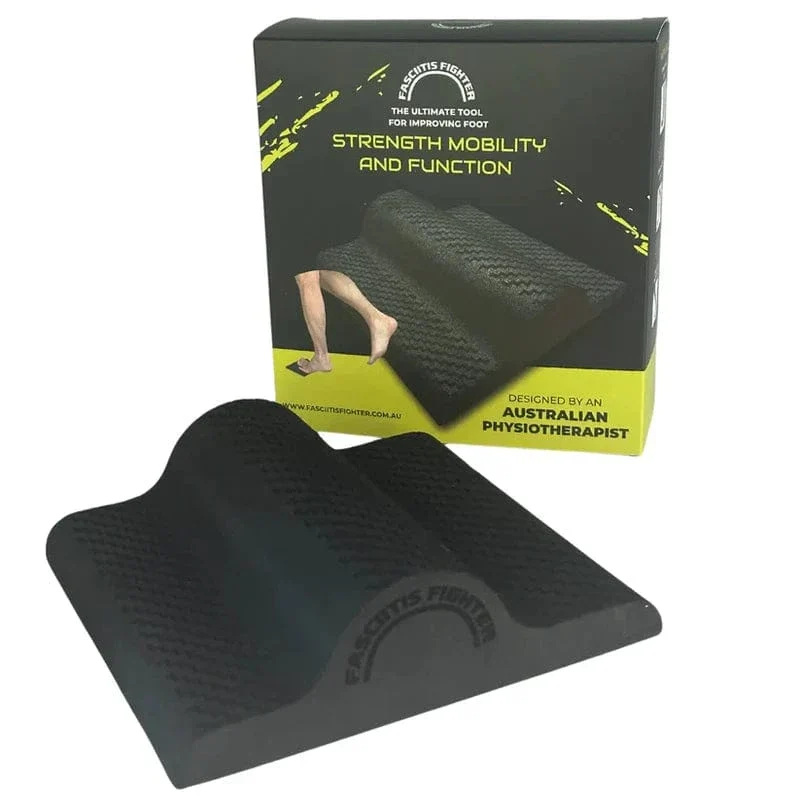
The Fasciitis Fighter is a simple, sturdy foot exercise device that makes it easy to do strengthening exercises for plantar fasciitis at home. Made from high-density EVA foam, it supports your toes in a raised position while you do slow heel raises, placing a controlled load through the plantar fascia and calf muscles. It replaces the rolled-up towel often used for this exercise, so every session is consistent and set up in seconds.
Fasciitis Fighter key features
Designed for high-load strength training of the foot and calf
Holds the toes in a consistent raised position for every repetition
High-density EVA foam that is firm, stable and durable
Compact size: 15cm long x 15cm wide x 4.5cm high
Lightweight and easy to use at home, at work or when travelling
Replaces the rolled-up towel method
Comes in a retail box, ideal as a gift for runners and walkers
How does strength training help plantar fasciitis?
Plantar fasciitis is a common cause of heel pain, often felt most with the first steps in the morning. High-load strength training is an active approach that gradually builds the strength of the foot and calf. Done consistently over three months or more, this type of exercise may help the plantar fascia better tolerate everyday activity and improve pain levels in persistent plantar fasciitis.
How to use
Place the Fasciitis Fighter on a flat floor, near a wall or bench for balance.
Stand with the toes of your working foot on the device so they are bent upwards, and your heel on the floor.
Slowly rise up onto your toes, pause at the top, then slowly lower back down.
Complete the number of repetitions and sets recommended by your podiatrist or physiotherapist.
Build up gradually over the following weeks, as advised by your health professional.
Who is the Fasciitis Fighter for?
Persistent plantar fasciitis: people following a strengthening program for ongoing heel pain.
Runners and walkers: strengthening the foot and calf as part of training.
People on their feet all day: building foot strength to cope with daily load.
Podiatrists and physiotherapists: a simple tool to help patients stick to a home exercise program.
Good to know
Heel pain has several possible causes, so see a podiatrist or physiotherapist for an assessment before starting a strengthening program. Some discomfort during exercise can be normal, but stop and seek advice if pain gets significantly worse or does not settle. You can read more about plantar fasciitis on the healthdirect website. For extra heel support during the day, see our insoles and inserts range.




Reviews
There are no reviews yet.