

Description
Shock Absorbing Insoles for Sensitive Feet
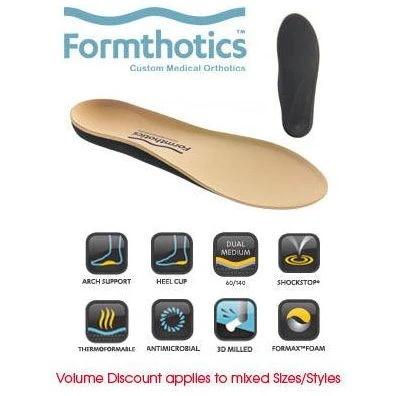
Formthotics ShockStop are dual density, shock absorbing insoles made for people who need extra cushioning without giving up support. A soft ShockStop foam top layer absorbs impact with every step, while a firm black base provides control and stability. They are a popular choice for older adults and people with arthritis, diabetes or other foot sensitivities, and can be heat moulded by your podiatrist for a closer fit.
Formthotics ShockStop key features
Dual layer design: soft cushioning on top, firm support underneath
ShockStop foam, a high-quality EVA and polymer hybrid, for high shock absorption
Firm black base for control and stability
Thermoformable, so they can be heat moulded for a custom fit
Antimicrobial to help keep insoles fresh
Full length, replacing your shoe’s existing insole
Medium density rating (60/140)
Manufactured in New Zealand
Listed on the Australian Register of Therapeutic Goods (ARTG 158355)
Sold as a pair
Who are ShockStop insoles for?
Sensitive or tender feet: extra cushioning to reduce impact on sore or sensitive areas.
Older adults: comfortable, stable support for everyday walking.
Arthritis: a softer surface underfoot may make standing and walking more comfortable.
Diabetes: cushioning and support for feet that need extra care. We recommend a podiatrist fitting if you have diabetes, reduced sensation or poor circulation.
Long hours on your feet: shock absorption for hard floors at work or home.
How are they different from standard Formthotics?
Standard Formthotics focus mainly on support and control. ShockStop adds a dedicated cushioning top layer, making it the better choice when comfort and impact absorption matter most, while the firm base still supports the arch.
Size guide
If you are between sizes, choose the larger size and trim the front to fit your shoe.
How to fit
Remove the existing insole from your shoe.
Place it on top of the Formthotics insole as a template and trim the front if needed.
Slide the insole into your shoe, pushing it fully into the heel.
Wear for a few hours on the first day, then build up gradually over a week or two.
For heat moulding and a custom fit, see your podiatrist.
Good to know
Insoles support comfort but do not replace a foot assessment. If you have diabetes, numbness, poor circulation or a history of foot ulcers, have your feet and footwear checked by a podiatrist and inspect your feet daily. Stop use and seek advice if you notice rubbing, redness or new pain. You can read more about diabetic foot care on the healthdirect website. Looking for firmer support? Browse our full insoles and inserts range.




Reviews
There are no reviews yet.